By Gergely Orosz, the author of The Pragmatic Engineer Newsletter and Building Mobile Apps at Scale

Nfs Underground 2 Car Mods Pack Hot -

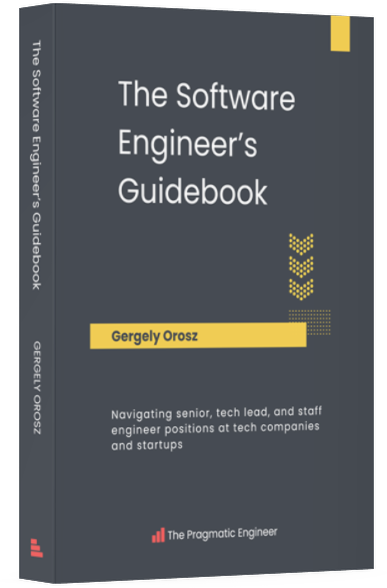
Navigating senior, tech lead, staff and principal positions at tech companies and startups. An Amazon #1 Best Seller. New: the hardcover is out! As is the audibook. Now available in 6 languages.

The Software Engineer's Guidebook

What's Inside

Part 1: Developer Career Fundamentals

1. Career paths
2. Owning your career
3. Performance reviews
4. Promotions
5. Thriving in different environments
6. Switching jobs

Part 2: The Competent Software Developer

7. Getting things done
8. Coding
9. Software development
10. Tools of the productive engineer

Part 3: The Well-Rounded Senior Engineer

11. Getting things done
12. Collaboration and teamwork
13. Software engineering
14. Testing
15. Software architecture

Part 4: The Pragmatic Tech Lead

16. Project management
17. Shipping in production
18. Stakeholder management
19. Team structure
20. Team dynamics

Part 5: Role-Model Staff and Principal Engineers

21. Understanding the business
22. Collaboration
23. Software engineering
24. Reliable software engineering
25. Software architecture

Further reading: online, bonus chapters

Bonus #1: for Part 1
Bonus #2: for Part 2
Bonus #3: for Part 3
Bonus #4: for Part 4
Bonus #5: for Part 5
See more details for each chapter in the extended table of contents for the book.

Nfs Underground 2 Car Mods Pack Hot -

The game's influence can also be seen in the broader context of car culture and sim racing. Enthusiasts who played NFS Underground 2 may have been inspired to learn more about real-world car modifications and tuning, reflecting the game's ability to bridge virtual and real-world automotive enthusiasm.

Players could choose to specialize in drag racing, circuit racing, or street racing, each requiring different sets of mods to excel. For instance, drag racing benefited from increased horsepower and torque, while circuit racing required a balance of speed and handling. The "hot" mods enabled players to experiment with different configurations, making each car unique and reflective of its owner's preferences.

The availability of "hot" car mods in NFS Underground 2 had a significant impact on both gameplay and the community. Gameplay became more dynamic and replayable, as players could experiment with various mod combinations to improve their cars' performance. This customization aspect added a layer of depth to the game, making it more than just a racing experience but a platform for creativity and self-expression. nfs underground 2 car mods pack hot

In NFS Underground 2, players were not just limited to racing; they had the creative freedom to modify and upgrade their cars to suit their driving style and aesthetic preferences. The game introduced a wide array of modification options, ranging from cosmetic changes like body kits, spoilers, and paint jobs, to more significant performance upgrades such as engine tuning, turbochargers, and exhaust systems. These modifications could be purchased using in-game money earned from races or could be unlocked through specific achievements.

The term "hot" in the context of NFS Underground 2 car mods refers to the high-performance upgrades that significantly boosted a vehicle's speed, acceleration, and handling. These mods included engine swaps, nitrous oxide systems, advanced suspension setups, and aerodynamic body parts. The allure of these mods lay in their ability to give players a competitive edge in races and to allow for a deeper level of customization. The game's influence can also be seen in

The Need for Speed: Underground 2 game, released in 2004, revolutionized the racing genre with its high-octane action, captivating storyline, and extensive car customization options. Among these, the car mods pack, particularly the "hot" mods, stood out for their ability to transform vehicles into high-performance beasts. This essay explores the allure and impact of the NFS Underground 2 car mods pack, specifically focusing on the "hot" mods that enthusiasts craved.

The NFS Underground 2 community was also profoundly affected by the car mods. Fans of the game shared their modding experiences, showing off their customized cars and the innovative mod combinations they had discovered. This communal aspect fostered a sense of belonging among players, who could discuss strategies, share tips on the best mods, and showcase their virtual automotive creations. Gameplay became more dynamic and replayable, as players

The modding culture encouraged by NFS Underground 2, particularly with its "hot" car mods, left a lasting legacy on the gaming industry. It demonstrated the value of customization and player creativity in enhancing the gaming experience. Subsequent Need for Speed games and other racing titles have continued to incorporate and expand upon the modding concepts introduced in Underground 2.

How to Read the Book

The book is separated into six standalone parts, each part covering several chapters:

  • Part 1: Developer career fundamentals
  • Part 2: The competent software developer
  • Part 3: The well-rounded senior engineer
  • Part 4: The pragmatic tech lead
  • Part 5: Role-model staff and principal engineers
  • Part 6: Conclusion

Parts 1 and 6 apply to all engineering levels: from entry-level software developers to principal or above engineers. Parts 2, 3, 4 and 5 cover increasingly senior engineering levels. These four parts group topics in chapters – such as ones on software engineering, collaboration, getting things done, and so on.

This book is more of a reference book that you can refer back to, as you grow in your career. I suggest skimming over the career levels and chapters that you are familiar with, and focus reading on topics you struggle with, or career levels where you are aiming to get to. Keep in mind that expectations can vary greatly between companies.

In this book, I’ve aimed to align the topics and leveling definitions closer to what is typical at Big Tech and scaleups: but you might find some of the topics relevant for lower career levels in later chapters. For example, we cover logging, montiroing and oncall in Part 5: “Reliable software systems” in-depth: but it’s useful – and oftentimes necessary! – to know about these practices below the staff engineer levels.

Nfs Underground 2 Car Mods Pack Hot -

Paperback
  • For most countries, buy the hardcover or softcover from Amazon:
  • Buy on Amazon
  • Other sites to buy it on:
  • Buy directly from the publisher in India; also shipping to Sri Lanka, Bangladesh, Nepal, Bhutan and Maldives:
  • Buy from Shroff Publishers
  • Unable to order the book in your country? Please share details here and I'll aim to remedy the situation.
eBook
Audibook

Translations

The Software Engineer's Guidebook is available in multiple languages:

Nfs Underground 2 Car Mods Pack Hot -

The book doesn't ship to my location, or shipping is silly expensive off Amazon.

You should now be able to ask your local book shops to order the book for you via Ingram Spark Print-on-demand - using the ISBN code 9789083381824. I'm also working on making the paperback more accessible in additional regions, including translated versions. Please share details here if you're unable to get the book in your country and I'll aim to remedy the situation.

I'm an engineering manager. Is the book useful to me?

I'd like to think so! The book can help you get ideas on how to help software engineers on your team grow. And if you are a hands-on engineering manager (which I hope you might be!) then you can apply the topics yourself! I wrote more about staying hands-on as an engineering manager or lead in The Pragmatic Engineer Newsletter.

I'm not a software engineer. Is the book useful to me?

I've gotten this variation of a question from Data Engineers, ML Engineers, designers and SREs. See the more detailed table of contents and the "Look inside" sample to get a better idea of the contents of the book. I have written this book with software engineers as the target group, and the bulk of the book applies for them. Part 1 is more generally applicable career advice: but that's still smaller subset of the book.

image

About the Author

I've been a software engineer for a decade — working at JP Morgan, Skype/Microsoft, Skyscanner and Uber — and then an engineering manager for another several years.

As an engineering manager, I did my best to support people on my team to improve professionally, get the promotions they deserved, and give clear, actionable feedback when I thought colleagues weren’t ready for the next level, just yet.

As my team grew and I took on skip-level reports, I had less and less time to mentor teammates in-depth. I also started to see patterns in the feedback I gave, so began to publish blog posts of the advice I found myself giving repeatedly; about writing well, and doing good code reviews. These posts were warmly received, and a lot more people than I expected read and shared them with colleagues. This is when I began writing this book.

The book took four years to write. By year two of the writing process, I had a draft that could be ready to publish. However, at that time I launched The Pragmatic Engineer Newsletter. The focus of this newsletter is keeping the pulse of today’s tech market, plus regular deepdives into how well-known, international companies operate, software engineering trends, and occasional interviews with interesting tech people. Writing the newsletter made me realize just how many “gaps” were in the book draft. The past two years have been spent rewriting and honing its contents, one chapter at a time.

Today, The Pragmatic Newsletter is the #1 technology newsletter on Substack — with more than 500,000 readers. The newsletter has helped me improve the book; I’ve learned lots about interesting trends and new tools that feel like they are here to stay for a decade or longer, such as AI coding tools, cloud development environments, and developer portals. These technologies are referenced in this book in much less detail than you will find in the newsletter.

I hope you discover useful ideas in this book, which serve you well for years to come.

Follow me on Linkedin, or on Twitter at @GergelyOrosz.

The links to books on this site (including to my book!) are affiliate ones. As an Amazon Associate I earn from qualifying purchases.